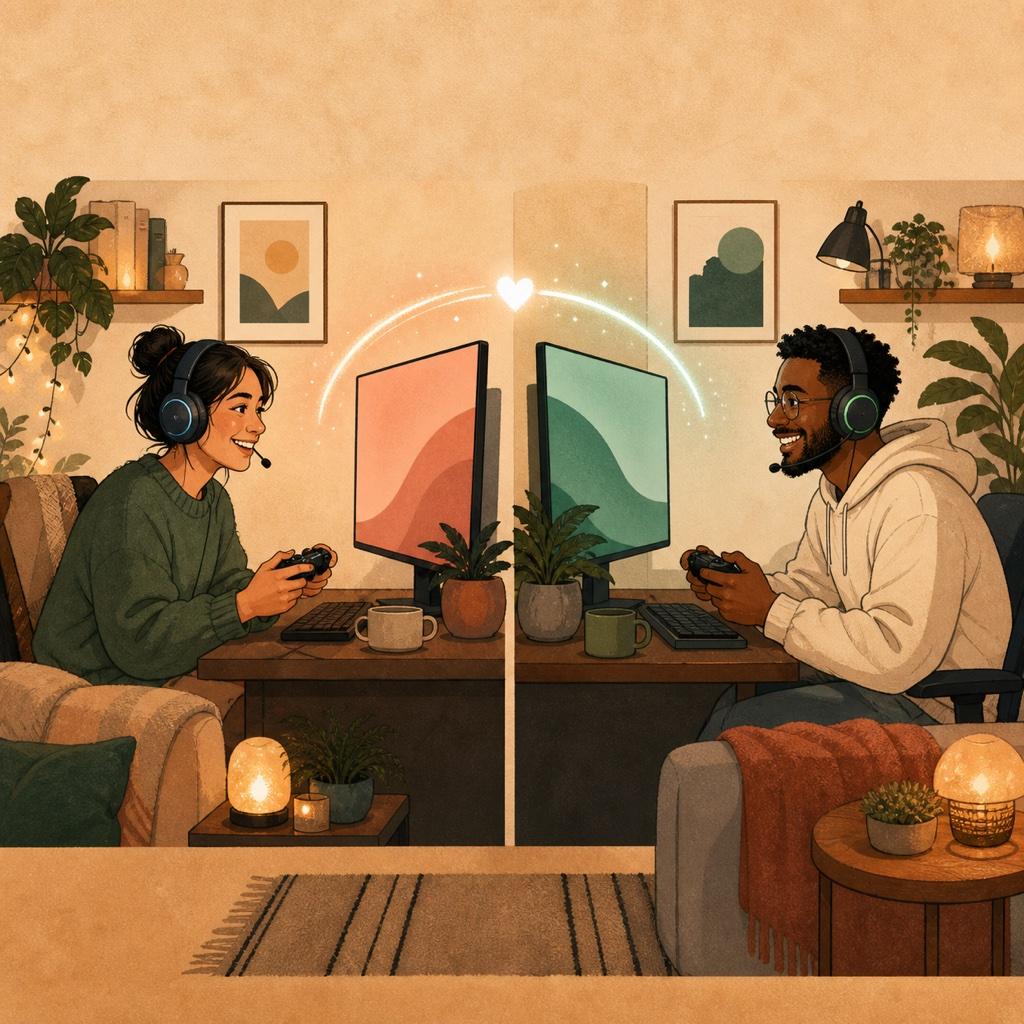
Gaming seems like it should make friendship easy. You are already spending time with people, cooperating, competing, solving problems, and sharing emotional highs and lows. But many gamers still feel lonely because random matchmaking rarely turns into real connection.
The missing ingredient is repetition. You do not make gamer friends by playing with a thousand strangers once. You make gamer friends by playing with the same compatible people enough times that familiarity becomes trust.
This guide shows you how to find better gaming spaces, start talking without making it weird, and turn good sessions into repeat friendships.
Move Beyond Random Matchmaking
Random matchmaking is designed to fill a lobby, not build a friendship. You may have a great round with someone and never see them again.
If you want gamer friends, move toward spaces where repeat contact is normal: guilds, clans, static groups, Discord communities, community nights, raid teams, co-op groups, modding servers, or smaller game-specific groups.
The goal is to become recognizable. Once people know your username, your play style, and that you are pleasant to have around, friendship has somewhere to grow.
Choose Communities with the Right Vibe
Not every gaming community is worth your time. Some are toxic, hyper-competitive, or full of people who treat every mistake like a moral failure.
Look for communities that mention beginner-friendly play, casual runs, learning parties, chill groups, inclusive moderation, scheduled events, or co-op nights. These signals matter.
If a server is full of insults, drama, or constant status games, leave. You are not obligated to earn friendship in a place that makes you feel worse.
A good gamer-friend group makes you want to queue again even after losing. A bad one makes winning feel stressful.
Be Easy to Play With
You do not need to be the best player in the lobby to make friends. You need to be someone people enjoy playing with.
That means communicating clearly, owning mistakes without spiraling, complimenting good plays, avoiding rage, being patient with newer players, and respecting the group's pace.
Skill can attract attention, but emotional steadiness keeps invitations coming. People remember how it felt to play with you.
Use Activity-Based Voice Chat
Open-ended voice chat can feel intimidating because there is no structure. Activity-based voice chat is easier because the game gives everyone something to talk about.
Join voice for a specific purpose: a dungeon, raid, ranked session, co-op mission, build review, tournament practice, or community event. You can keep your first lines simple: 'Hey, first time running this with the group' or 'I can flex support if needed.'
Once the activity starts, conversation becomes practical. Calls, jokes, questions, and reactions happen naturally because you are doing something together.
Low-pressure voice opener: 'Hey, I am a little quiet at first, but I am good to run a few. Let me know if you need callouts or if we are just playing chill.'
Follow Up After Good Sessions
Many potential gaming friendships fade simply because nobody follows up. Everyone had fun, then everyone assumes someone else will initiate.
If a session went well, send a small message: 'That was fun. Want to run more later this week?' or 'Good games. I am usually on around this time if you want to queue again.'
This is not needy. It is practical. Friendship requires repeat contact, and repeat contact often needs one person to suggest it. For more on this move, read how to follow up after meeting someone new.
Avoid the Parasocial Trap
Streamer communities can be fun, but they do not automatically create friendship. Watching the same creator gives you a shared interest, but friendship still requires peer-to-peer interaction.
Look for community game nights, smaller side Discords, viewer groups, tournament teams, or channels where members talk to each other rather than only reacting to the streamer.
A healthy gamer friendship is mutual. You both initiate, respond, joke, help, and make time. If all the energy points toward a public figure, it may be entertainment rather than friendship.
Your Action Step
Choose one game you already play and find one smaller recurring community around it. Join a scheduled event or LFG channel this week.
Your goal is simple: play with the same person or group twice. Not become best friends. Not reinvent your social life. Just create repeat play. That is where gamer friendship starts.
Frequently Asked Questions
Where can I find gamer friends online?
Look for game-specific Discord servers, guilds, clans, subreddit communities, streamer communities, co-op LFG channels, MMO groups, speedrunning communities, modding communities, and scheduled community nights. Smaller recurring groups are usually better for friendship than huge public servers.
How do I make friends in Discord without being awkward?
Start by participating around the shared game. Reply to questions, join scheduled events, ask for build advice, or offer to help with a mission. After a few normal interactions, voice chat feels less abrupt.
Should I use voice chat to make gamer friends?
Voice chat helps, but you do not need to jump into it immediately. Start with text if that feels safer, then join voice for a specific activity like a dungeon, ranked session, raid, or co-op run. Activity-based voice chat is easier than open-ended hanging out.
How do I turn a good gaming session into a friendship?
Send a simple follow-up: 'That was fun. Want to run another one this week?' Add them, invite them again, and become a consistent positive presence. Repeat play is what turns a teammate into a friend.
Sources
Your next real-world rep
Turn “we should hang out” into a plan
Invite someone you would like to see to a specific activity with a day or time window. Make it easy to accept, suggest another time, or decline.
Try this challenge →