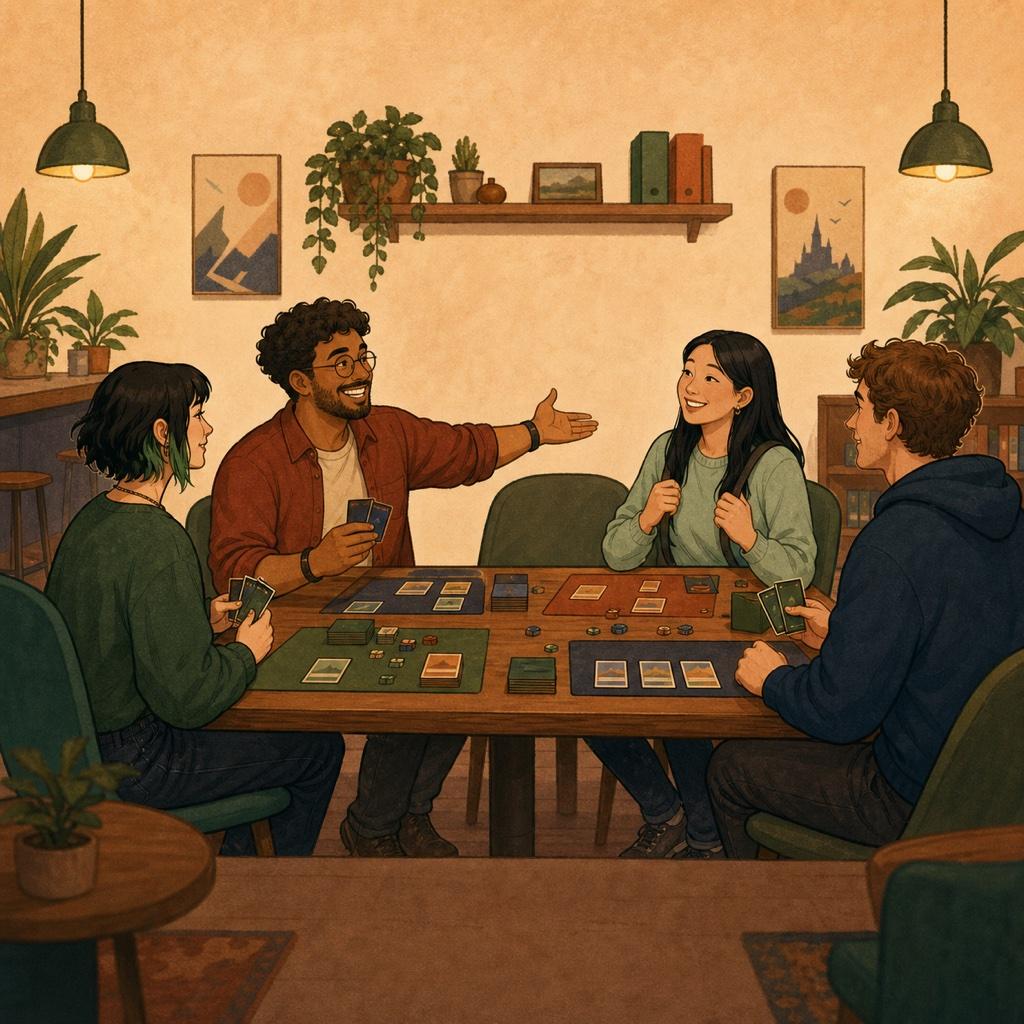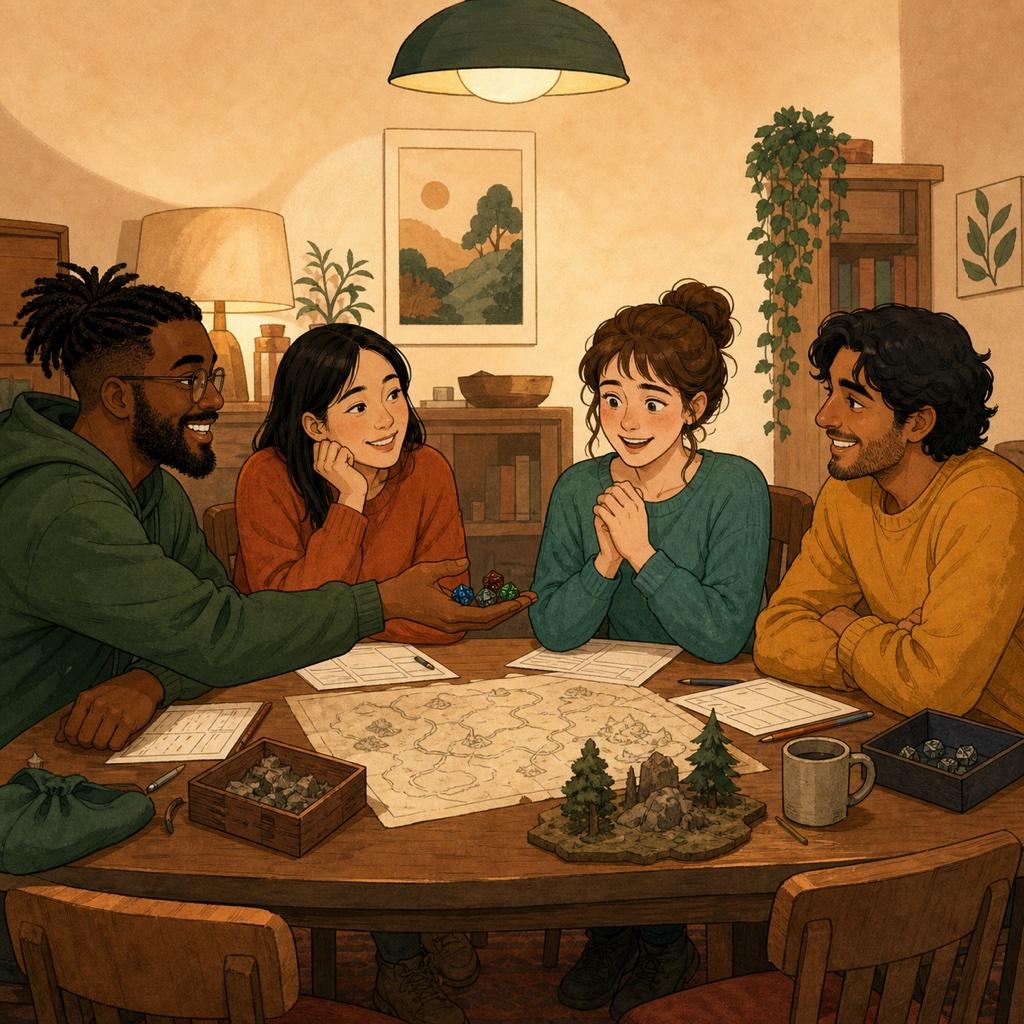
Searching for a D&D group near you can feel strangely intimidating. The game is social, creative, and collaborative, but the path into a table is not always obvious. Do you message a store? Join a Discord? Walk into a game night? What if everyone already knows what they are doing?
Good news: beginner-friendly D&D groups exist in most cities, and many organizers actively want new players. The trick is knowing where to look, how to ask, and how to choose a table that will not overwhelm you on your first night.
This guide is for people who want the social benefits of D&D but feel awkward joining an established group. If general friendship-building is the bigger challenge, read how to make friends as an adult.
Start with Local Game Stores
Local game stores are usually the best first stop because they already function as community hubs. Many host D&D nights, learn-to-play sessions, D&D Encounters or Adventurers League games, one-shots, Magic: The Gathering nights, or bulletin boards where Dungeon Masters post open seats.
Search for stores near you, then check their event calendar, Discord, Facebook page, or in-store notice board. If the calendar is unclear, call or email and ask whether they run beginner-friendly D&D.
You can also use the Wizards Event Locator to find stores and events connected to Wizards Play Network locations. Not every D&D table will be listed there, but it is a useful starting point.
Message template: 'Hi, I am new to D&D and looking for a beginner-friendly table. Do you host any intro sessions, one-shots, or groups with open seats?'
Look for Beginner-Friendly Signals
Not every table is a good first table. Some groups are deep into long campaigns, complex house rules, or intense roleplay expectations. That can be fun later, but it is not always the best entry point.
Look for phrases like 'new players welcome,' 'learn to play,' 'beginner one-shot,' 'session zero,' 'Adventurers League,' 'drop-in friendly,' or 'no experience needed.' These signal that the organizer expects to teach.
If a listing uses lots of unexplained jargon, has a long application form, or sounds annoyed by basic questions, skip it for now. Your first group should reduce anxiety, not prove you are worthy.
Try One-Shots Before Campaigns
A one-shot is a single-session adventure. It is the perfect beginner format because you can try the game, meet people, and learn table etiquette without committing to months of weekly sessions.
Campaigns are wonderful, but they require schedule compatibility, group trust, and a shared play style. A one-shot lets you test all of that in a lower-pressure way.
After the one-shot, if the group felt good, say so directly: 'That was fun. If you ever run another beginner game or need a player, I would be interested.' This is how many long-term tables quietly form.
Use Online Tools to Find Offline Tables
Online communities are often the easiest way to discover local games. Search city-specific Discords, Reddit communities, Meetup groups, Facebook groups, library calendars, board game cafe calendars, and university club pages.
Use search phrases like 'D&D in your city,' 'local tabletop RPG group,' 'Dungeons and Dragons group near me,' 'D&D beginner night,' and 'board game cafe RPG night.'
When posting, be specific. Mention that you are new, your general location, your availability, whether you can travel, and what kind of table you want. Specific posts are easier for organizers to answer.
Post template: 'Beginner player looking for an in-person D&D group near the east side of town. I can do weeknights after 6 or Sundays. I am new but happy to learn, and I would love a beginner-friendly one-shot or campaign with open seats.'
Ask About Table Culture
The most important part of a D&D group is not the rules. It is the table culture. A good table makes people feel safe, included, and excited to contribute. A bad table makes even a great adventure feel exhausting.
Before joining, ask a few simple questions: Is the table beginner-friendly? What tone is the game? How long are sessions? Are there safety tools or boundaries? Is roleplay heavy or combat heavy? What does the group expect from players?
These questions are not demanding. They show that you care about being a good fit. Good organizers appreciate that.
What to Do at Your First Session
Show up on time. Bring dice if you have them, but do not stress if you do not. Bring a notebook, a pencil, water, and a willingness to ask questions at appropriate moments.
You do not need to perform. You do not need a funny voice. You do not need to know every spell. Focus on three things: listen when others act, say what your character tries to do, and respect the table's rhythm.
Afterward, thank the organizer. If you liked the group, make that clear. Many people lose potential friendships because they assume interest is obvious. It usually is not.
Your Action Step
Today, find three possible D&D entry points near you: one game store, one online local group, and one library, cafe, or meetup calendar. Send one short beginner-friendly message.
The goal is not to find your forever campaign immediately. The goal is to get one seat at one table, learn the rhythm, and let repeated play create the social momentum.
Frequently Asked Questions
Where can I find D&D groups near me?
Check local game stores, the Wizards Event Locator, libraries, board game cafes, Meetup, Facebook groups, Discord servers, Reddit city communities, university clubs, and convention calendars. Stores and libraries are often the best first stop because events are structured and organizers expect newcomers.
Can beginners join D&D groups?
Yes. Many tables welcome beginners, especially one-shots, intro nights, Adventurers League events, and learn-to-play sessions. The important thing is to be honest about your experience level so the organizer can match you with the right table.
What should I say when asking to join a D&D group?
Keep it simple: 'Hi, I am new to D&D and looking for a beginner-friendly group. Do you have any open seats or upcoming one-shots?' Add your availability, whether you can play in person or online, and that you are happy to learn table rules.
What if I am nervous about roleplaying?
Start with a beginner one-shot or a table that explicitly says new players are welcome. You do not need a dramatic voice or perfect character backstory. Good D&D is mostly listening, making choices, and being respectful of the group.
Sources
- Wizards of the Coast (2026). Official Wizards Store & Event Locator.
- Wizards Play Network (2026, April 20). D&D Organized Play: New Seasons, Programs, and Event Types. Wizards of the Coast.
- Boothby, E. J., Cooney, G., Sandstrom, G. M., & Clark, M. S. (2018). The liking gap in conversations: Do people like us more than we think? Psychological Science, 29(11), 1742–1756.
Your next real-world rep
Ask to join an open group conversation
At a meetup or another welcoming social setting, ask to join an open conversation. Respect a no, a private discussion, or a group that does not make room.
Try this challenge →