Advice such as 'put yourself out there' leaves out the practical details: where to go, how to join, and what to do when the setting or communication style does not suit you. Those details can matter more than another encouragement to be confident.
'Asperger's syndrome' is an older diagnostic label now included within autism spectrum diagnoses. Some people still use it for themselves. This guide uses autistic and offers options to adapt; it does not assume that everyone has the same strengths, difficulties, or goals.
Why Standard Friendship Advice Fails Autistic People
Some advice assumes that hints are easy to interpret, small talk is comfortable, and a busy gathering is a good place to meet. If those assumptions do not fit you, changing the setting or making expectations clearer may help. Other autistic people enjoy those same situations; there is no single autistic friendship style.
A difficult interaction can reflect a mismatch between people or an inaccessible environment. It does not automatically mean you need more training. Useful adjustments might include written plans, a smaller group, breaks, direct questions, or a shared activity that both people enjoy.
Lean on Structure: Pick Settings With Rules
If unstructured mingling is tiring or confusing, you can start somewhere else. A group with a clear activity may reduce the need to invent topics or decide when to approach. Check the noise, accessibility, rules, and atmosphere as well as the activity itself.
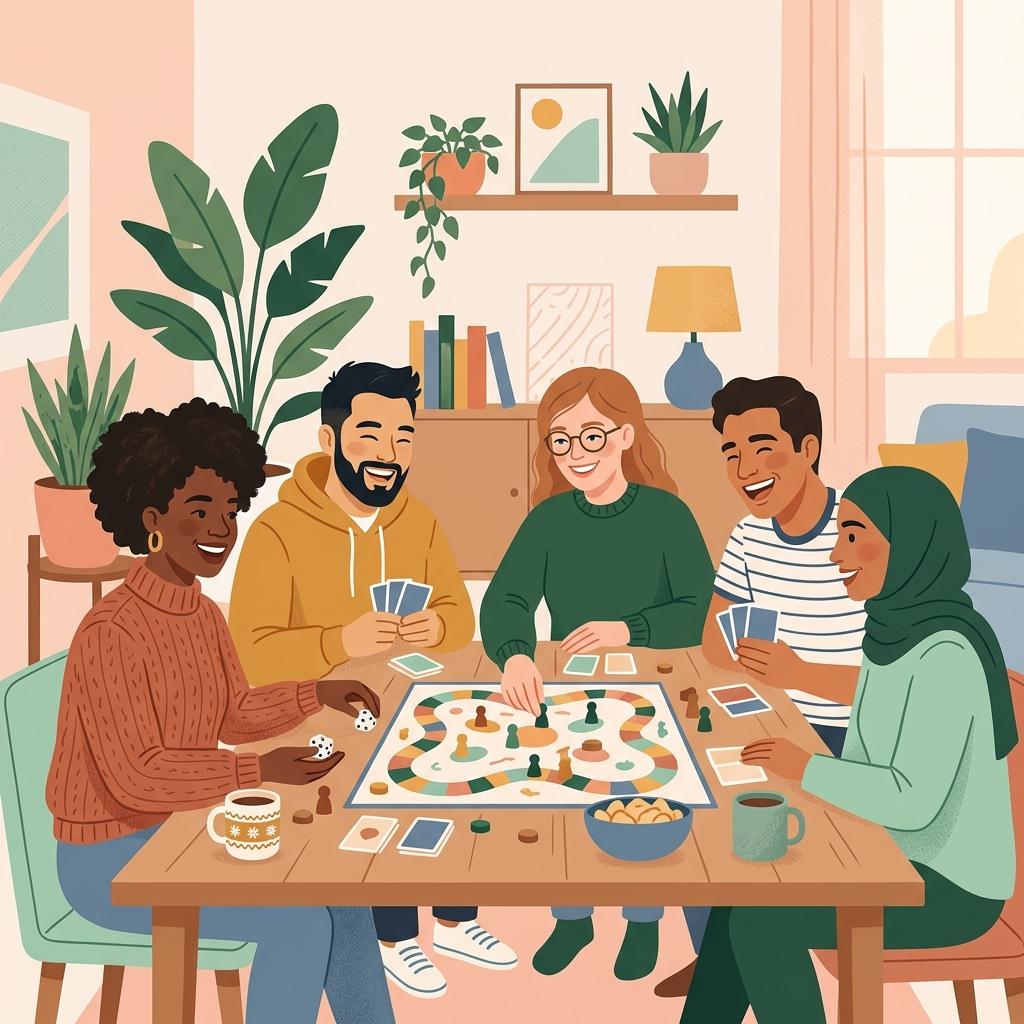
D&D, board games, maker groups, fandom communities, and classes can provide shared topics and recurring contact. They can also involve noise, uncertainty, and complex group dynamics, so they are options rather than universal solutions. Ask what a typical session is like. These guides explain finding a beginner D&D group and finding nerd friends online and offline.
Choose somewhere you want and are able to return to. Repeated contact creates opportunities to get to know people, but it does not guarantee friendship. A welcoming group with manageable demands is more useful than a supposedly ideal activity you dread attending.
Turn Implicit Norms Into Explicit Rules
When uncertainty is the problem, discuss a preference directly rather than trying to infer an unwritten rule. Different friends may prefer different rhythms; agreement matters more than matching a universal script.
For turn-taking, you might try answering a question and then leaving space for the other person. Asking something back can help, but alternating questions is not a requirement. Some friends enjoy long stories, shared silence, or enthusiastic exchanges about one interest. Find out what works between you.
If you want to talk at length about an interest, offer a choice: 'I'd love to explain this—do you want the short version or the detailed one?' Keep the answer open and respect it. The same consideration applies when your friend wants to share their interests.
Try: 'I could talk about this for ages. Have you got time for the long version?' A short answer is not a rejection of your interest. You can save the longer conversation for another time or someone who shares it.
Masking, Disclosure, and Choosing Low-Mask Friends
Research on autistic camouflaging describes efforts such as suppressing natural behavior or performing expected reactions, and participants report costs. Burnout research also identifies masking among several contributing pressures. The effects and choices differ between people; no one should require you to force eye contact or hide harmless stims to earn friendship.
Notice whether a potential friend respects your stated needs and whether you feel able to be yourself around them. One difficult afternoon does not settle that question, but a recurring need to hide discomfort or perform enthusiasm is worth discussing.
Disclosure may help explain a preference, but it is optional and may feel safer in some settings than others. If you choose it, use details that are true for you: 'I'm autistic, and I find direct invitations easier than hints.' You do not need to describe every aspect of your experience.
A useful middle path is disclosing the trait without the label: 'I'm pretty literal—if you hint, I will genuinely not catch it, so just tell me straight.' You get most of the practical benefit while keeping the diagnosis private until you trust someone with it. Both are legitimate, and you can use different levels with different people.
If social difficulties come with significant distress, exhaustion, or burnout, an autism-informed therapist can genuinely help—look for one who works with autistic adults and treats autism as a neurotype, not a defect. And if you suspect you are autistic but were never assessed, pursuing an assessment as an adult is valid and increasingly common.
Handle Sensory Limits Without Losing the Friendship
If a friend repeatedly proposes a setting that does not work for you, explain the preference and offer an alternative when you want one: 'Loud bars are difficult for me. Would you like to walk or play online instead?' You are also allowed to decline without arranging another plan immediately.
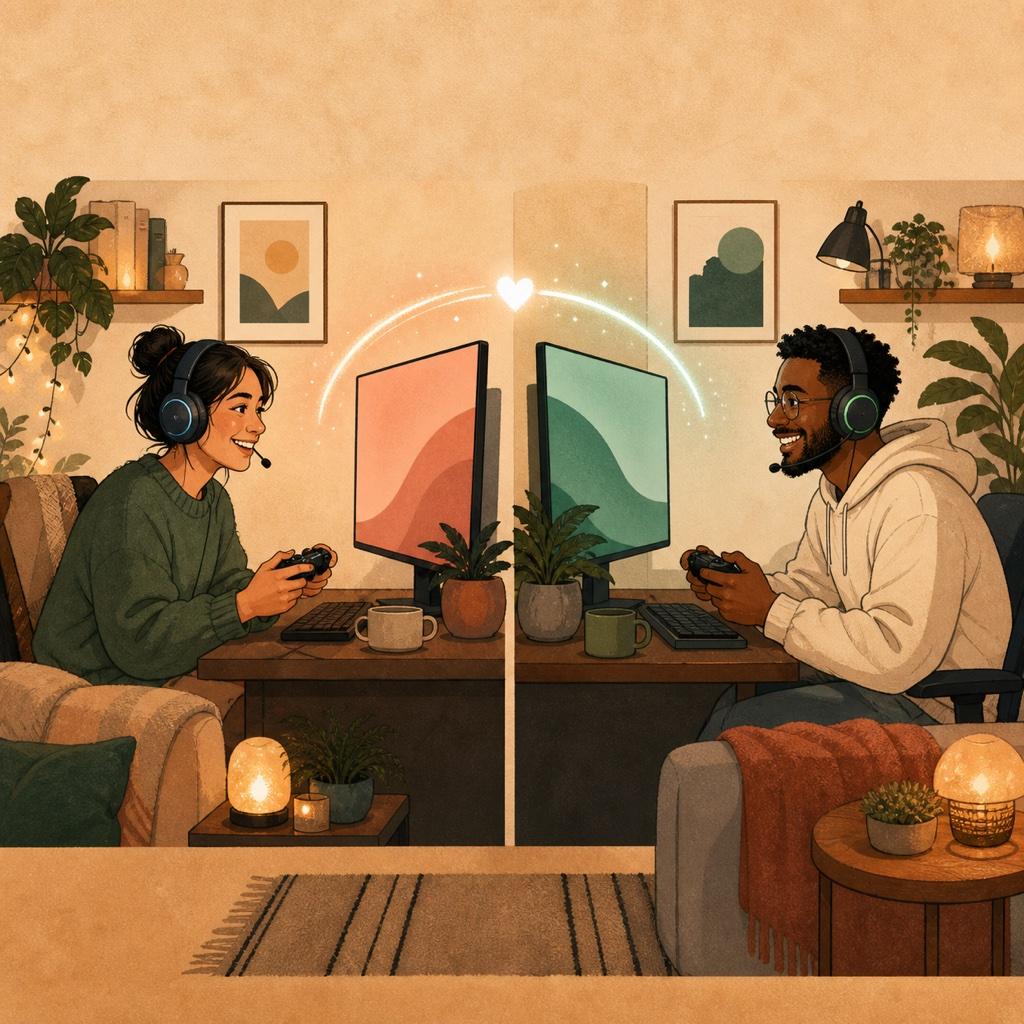
'Crowded bars fry my brain, but I'd genuinely like to hang out—want to do a co-op game online Thursday, or grab a walk this weekend instead?' Quieter alternatives carry connection just as well, often better: co-op gaming, one-on-one coffee, walks, board games at someone's place instead of a party. You are not asking them to accept less of you; you are routing the friendship through channels where they get more of you.
You also do not owe anyone a physiology lecture with every no. A short reason plus an alternative is complete—how to set boundaries without overexplaining covers why the short version actually lands better than the justified one.
Double Empathy: The Mismatch Goes Both Ways
For decades, the framing was that autistic people have a social deficit, full stop. The double empathy problem—proposed by sociologist Damian Milton and supported by several (though not all) follow-up studies—reframes it: communication between autistic and non-autistic people breaks down in both directions. Non-autistic people misread autistic people too: in experiments, they are measurably worse at reading autistic people's expressions and intentions than at reading each other. Meanwhile, autistic-to-autistic communication often flows easily, with information transferring just as well as in all-neurotypical groups.
The practical implication is to look for mutual understanding. Neurodivergent-friendly groups may offer that, but labels alone do not guarantee compatibility. Notice how people respond to a direct request, a difference of opinion, or a need for a break.
Online-first friendship deserves an explicit defense: it is not a lesser substitute. Text-based communication removes eye contact, real-time processing pressure, and sensory load, while shared servers and guilds provide exactly the structure this article keeps recommending. Many autistic adults' deepest friendships started in a raid group or a modding forum. If that is your natural habitat, how to make gamer friends online without feeling awkward turns it into a deliberate strategy.
Maintenance: Reminders and Schedules Are Not Fake
If keeping in touch is difficult, it can help to make the intention visible: a calendar reminder, a note about an upcoming event, or an agreed time to meet. Forgetting to message is not proof that you do not care, and it is not a universal autistic trait.
Choose a rhythm together if possible: 'Would you like a regular monthly game night?' Use reminders for yourself, with flexibility when plans change. A schedule can make contact easier to arrange; it cannot guarantee that a friendship will last. Check occasionally that the arrangement still works for both of you.
Start smaller than feels impressive: one structured group you attend repeatedly, one person you message on a schedule, one counter-offer instead of a plain no. Explicit systems compound. That is the advantage of learning friendship the way you learn everything else—deliberately, honestly, and in a way that actually holds up under load.
If you want to follow up, send a brief message when you have the capacity: 'I enjoyed our game—would you like to play again?' A reminder can help you remember an intention. You do not need to meet a universal 48-hour deadline.
Frequently Asked Questions
How can I make friends if I am autistic?
Start with a setting and communication format that suit you. A shared activity, smaller group, text-based community, or recurring event may help. Look for mutual interest and respect rather than trying to perform a particular social style. Preferences and support needs vary between autistic people.
Do I have to tell people I am autistic?
No. Disclosure is your choice. You can share a specific preference without a diagnosis, such as 'Direct questions work better for me than hints' or 'I'd prefer somewhere quieter.' Consider your comfort and the setting before sharing personal information.
Are online friendships real friendships?
Yes. Online friendships can provide companionship, mutual support, and shared experiences. Text, voice, and video each suit different people. Use the format that works for both of you, with ordinary privacy and safety boundaries.
How do I keep in touch without getting overwhelmed?
Agree on a manageable rhythm and use reminders if they help. Let friends know if you need time to respond or a different activity. A schedule can reduce the work of arranging contact, but friendship still needs flexibility and mutual willingness.
Sources
- National Autistic Society. Asperger syndrome (Asperger's).
- Raymaker, D. M., Teo, A. R., Steckler, N. A., et al. (2020). "Having all of your internal resources exhausted beyond measure and being left with no clean-up crew": Defining autistic burnout. Autism in Adulthood, 2(2), 132-143.
- Hull, L., Petrides, K. V., Allison, C., Smith, P., Baron-Cohen, S., Lai, M.-C., & Mandy, W. (2017). "Putting on my best normal": Social camouflaging in adults with autism spectrum conditions. Journal of Autism and Developmental Disorders, 47, 2519-2534.
- Milton, D. E. M. (2012). On the ontological status of autism: The 'double empathy problem'. Disability & Society, 27(6), 883-887.
- Sheppard, E., Pillai, D., Wong, G. T.-L., Ropar, D., & Mitchell, P. (2016). How easy is it to read the minds of people with autism spectrum disorder? Journal of Autism and Developmental Disorders, 46, 1247-1254.
- Edey, R., Cook, J., Brewer, R., Johnson, M. H., Bird, G., & Press, C. (2016). Interaction takes two: Typical adults exhibit mind-blindness towards those with autism spectrum disorder. Journal of Abnormal Psychology, 125(7), 879-885.
- Crompton, C. J., Ropar, D., Evans-Williams, C. V., Flynn, E. G., & Fletcher-Watson, S. (2020). Autistic peer-to-peer information transfer is highly effective. Autism, 24(7), 1704-1712.
- Crompton, C. J., Foster, S. J., Wilks, C. E. H., et al. (2025). Information transfer within and between autistic and non-autistic people. Nature Human Behaviour, 9(7), 1488-1500.
- Sasson, N. J., & Morrison, K. E. (2019). First impressions of adults with autism improve with diagnostic disclosure and increased autism knowledge of peers. Autism, 23(1), 50-59.
- Russell, G., Stapley, S., Newlove-Delgado, T., et al. (2022). Time trends in autism diagnosis over 20 years: A UK population-based cohort study. Journal of Child Psychology and Psychiatry, 63(6), 674-682.
- Hall, J. A. (2019). How many hours does it take to make a friend? Journal of Social and Personal Relationships, 36(4), 1278-1296.
Your next real-world rep
Ask to join an open group conversation
At a meetup or another welcoming social setting, ask to join an open conversation. Respect a no, a private discussion, or a group that does not make room.
Try this challenge →