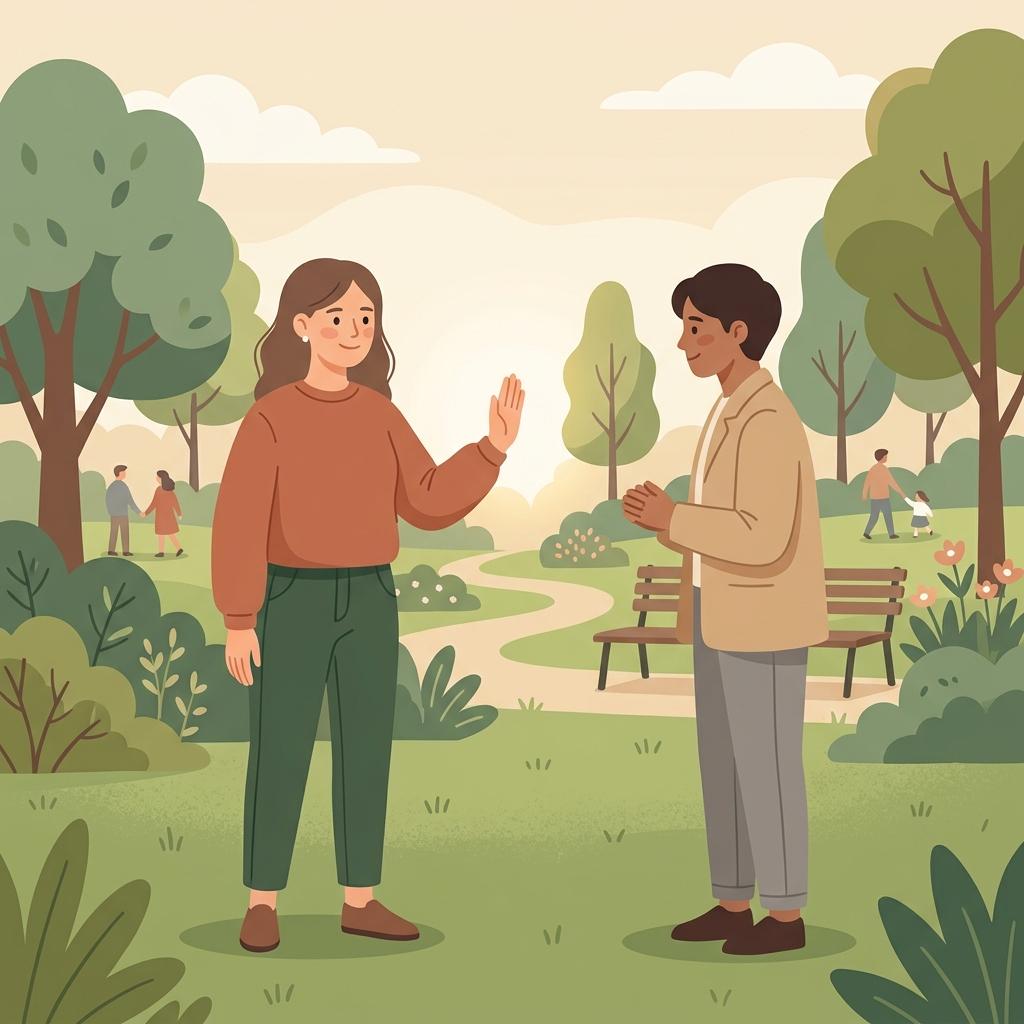
Blushing is a sympathetic nervous system reflex triggered by feeling socially evaluated—you cannot switch it off by willpower, and trying to suppress it reliably makes it worse. What works is cooling the loop, not the face: slow exhale-heavy breathing, dropping shoulder tension, and pushing your attention outward onto the other person, which starves the self-monitoring that feeds the flush. The real cheat code is acceptance—letting the blush happen while you keep talking. Research suggests observers judge blushing far less harshly than blushers assume, and often read it as sincerity. One light acknowledgment line, then move on.
You feel it before anyone sees it: the heat climbing your neck, the certainty that your face is broadcasting your inner state in high-visibility red. Then comes the worst part—not the blush itself, but the frantic internal commentary about the blush, while you try to remember what you were saying.
Here is the honest version most articles skip: you cannot fully stop blushing, because it is a reflex, not a decision. But you can dramatically shrink how often it fires, how intense it gets, and—most importantly—how much it costs you. This article covers the physiology, the loop that makes it worse, the in-the-moment moves that actually help, and the acceptance shift that, paradoxically, is the closest thing to a cure.
Why You Blush (and Why Willpower Can't Stop It)
Blushing is your sympathetic nervous system—the fight-or-flight branch—responding to perceived social evaluation. When your brain flags a situation as 'people are judging me,' it releases adrenaline, which among other things dilates the blood vessels in your face. More blood near the surface, visible redness, radiating heat. The entire sequence is involuntary, which is why 'just don't blush' is advice on the level of 'just don't sneeze.'
Sensitivity varies for boring biological reasons. The tendency runs in families, so it is partly genetic. And if you are fair-skinned, the same vessel dilation that would be invisible on someone else shows up on you like a status LED. You did not choose this hardware. What you can influence is the trigger threshold—how readily your brain classifies a situation as threat—and that is exactly what the rest of this article works on.
The Loop That Makes It Worse
Occasional blushing would be a minor quirk if not for the loop it spawns. It runs like this: you fear blushing, so you start monitoring your face for heat. Monitoring is itself a form of threat-focus, which keeps your sympathetic system aroused. Arousal produces the very blush you were scanning for. The blush confirms the fear, the fear sharpens the monitoring, and around it goes. Blushing becomes less a reaction to embarrassing moments and more a reaction to its own anticipation.
Suppression pours fuel on this. Every study on thought and emotion suppression finds the same pattern: actively trying not to have a response increases the internal monitoring for it, which increases arousal, which produces more of the response. Fighting a blush mid-conversation means running an intense inner battle—'stop it, is it visible, stop it'—while your face reddens further and your conversational thread evaporates. The battle, not the blush, is what people actually notice.
Read the loop again and notice something useful: the blush itself is the least controllable link in the chain. The monitoring and the catastrophizing are the controllable ones. That is where every technique that works actually operates.
In the Moment: Cool the Loop, Not Your Face
Skip the folk remedies aimed at the face—pressing cold hands to your cheeks or willing the redness away treats the symptom and feeds the monitoring. Target the arousal underneath instead.
First, breathe with a long exhale. The exhale is the lever: breathe in normally for about four counts, out slowly for six to eight. Extended exhalation activates the parasympathetic brake on your nervous system—it is the fastest physiological input you have. Two or three of these breaths, done quietly while the other person talks, take the edge off the arousal that sustains the flush.
Second, drop your shoulders and unclench. Sympathetic arousal and muscle tension reinforce each other; releasing your shoulders, jaw, and hands sends a 'threat over' signal back up the chain. It is also invisible—nobody has ever noticed a person relaxing their shoulders.
Third—and this is the strongest move—push your attention outward. The blush loop runs on self-focused attention; it needs you watching yourself to survive. So give your attention a concrete external job: what exactly is this person saying? What do they seem to care about? What would I genuinely ask next? Attention on them starves the self-monitoring loop of the only fuel it has. This is the same mechanism behind how to stop overthinking conversations—curiosity and self-consciousness compete for the same bandwidth, and you get to pick which one wins.
Build the exhale habit outside of emergencies. Practice four-in, eight-out breathing for two minutes a day when calm, so it is automatic under pressure. A technique you first attempt mid-blush is a technique you will fumble.
The Acceptance Move That Breaks the Cycle
The single most effective long-term strategy sounds like giving up: let the blush happen, and keep talking. Feel the heat rise, note it—'yep, blushing'—and continue your sentence at the same pace. No pause, no cover, no apology. You are not pretending it is not happening; you are demonstrating to your own nervous system that it does not require a response.
This works for two reasons. First, it deletes the loop's middle steps: no suppression battle, no monitoring spiral, so the blush peaks lower and fades faster—typically within a minute or two once you stop feeding it. Second, it fixes the social outcome directly. The spotlight effect—our tendency to wildly overestimate how much others notice about us—is at its worst here: research on blushing consistently finds that observers judge it far less harshly than blushers predict, and often read it as sincerity, modesty, or evidence that you care. A blush with a finished sentence reads as endearing and human. A blush with visible panic reads as a crisis. Same face, different frame—and the frame is the part you control.
Each time you blush and carry on, you also log an exposure trial: your brain files 'blushed, continued, nothing bad happened,' and the trigger threshold drifts upward. Avoidance files the opposite report. The acceptance move is not just damage control in the moment; it is the training data for blushing less at all.
Scripts: Acknowledge It Once, Then Move On
Sometimes a blush is prominent enough that naming it beats ignoring it—a light acknowledgment releases the tension for both of you and proves you are not rattled. The formula: one line, delivered dry, then straight back to the topic.
Keep the tone matter-of-fact rather than apologetic. The line is not a confession; it is a stage direction that says 'noted, not news, moving on.' Never stack a second line on it, never explain the physiology, and never apologize—each of those converts a charming aside back into an incident.
Delivered this way, an acknowledged blush can genuinely land in your favor: unbothered self-awareness is one of the more likable signals available, and it costs one sentence. The same principle—brief honesty about a nervous tell, then redirect—does a lot of work in making a great first impression.
Pick one and keep it: 'Yes, I blush easily—my face runs its own PR department.' / 'Ignore the red; it means I'm paying attention.' / 'My face does this. Anyway—' Then immediately continue: '—so what happened with the migration?' The redirect is the part that sells it.
Long-Term: Lower Your Baseline Threat Level
In-the-moment tactics manage flare-ups; the durable fix is convincing your nervous system that social situations are not emergencies. There is no shortcut for this—only repeated, low-stakes exposure with the new strategy: enter mildly uncomfortable situations on purpose, let any blush happen, keep engaging, leave. Ask a question in a small meeting. Make one comment to a barista. Give one opinion in a group chat call. Boring, repeatable, effective.
Sequence it like progressive overload: start where the discomfort is a three out of ten and only move up when the current level gets dull. Frequency beats intensity—five tiny exposures a week retrain your threat detection faster than one heroic monthly ordeal that leaves you fried.
It also helps to audit whether the fear of judgment has other legs. If you generally assume you are coming across badly, the social awkwardness self-check can separate what needs practice from what is only anxiety talking, and how to read social signals replaces worst-case guessing with actual data about how you are landing.
What Not to Do
Do not build your life around avoiding attention. Declining presentations, dodging introductions, and going silent in groups feels protective, but every avoided situation confirms the threat and lowers your tolerance further. Avoidance is the fear's retirement plan.
Do not rely on concealment as your only strategy. Color-correcting makeup is a perfectly reasonable tool if it buys you confidence—but as the sole strategy it becomes safety behavior: your brain credits the concealer instead of you, the underlying fear stays fully intact, and any situation without it becomes an emergency. Same for hiding behind beards, high collars, or strategic lighting. Use tools alongside exposure, not instead of it.
Do not use alcohol as a social treatment. It dilates facial blood vessels—many people flush more when drinking—while teaching you that facing people requires a substance. That trade gets worse every time you make it.
None of this requires becoming a different person. You will probably always be someone whose face occasionally announces that you care. The goal is smaller and better: a nervous system that fires less often, a loop you know how to starve, one dry line for the visible moments—and the rest of your attention back on the conversation, where it belongs.
If fear of blushing (erythrophobia) or social anxiety is limiting your daily life—avoided jobs, relationships, or basic errands—cognitive behavioral therapy with a qualified therapist has strong evidence behind it and is the standard of care. A doctor is also worth a visit: rosacea, menopause, medication side effects, and some other conditions cause facial flushing without any social trigger, and they call for different treatment entirely.
Frequently Asked Questions
Why do I blush so easily?
Blushing is a sympathetic nervous system response: when your brain detects social evaluation, adrenaline dilates the blood vessels in your face. Sensitivity is partly genetic, and fair-skinned people simply show the same response more visibly. Frequent blushing usually means your threat-detection system is tuned high for social situations—not that anything is wrong with your character.
How do I stop blushing in the moment?
You cannot abort a blush that has already started—vessels dilate faster than willpower works. What you can do is stop feeding it: exhale slowly and longer than you inhale, drop your shoulders, and deliberately shift your attention onto the other person—their words, their face, your next genuine question. Reduced self-monitoring means less arousal, so the flush peaks lower and fades sooner.
Do other people judge me for blushing?
Far less than you think. The spotlight effect makes you overestimate how much people notice, and studies suggest observers often interpret blushing positively—as honesty, modesty, or caring about the interaction. What people actually remember is whether you kept engaging. A blush plus a finished sentence reads as endearing; only visible panic changes the impression.
When should I see a doctor or therapist about blushing?
If fear of blushing (erythrophobia) or social anxiety is shrinking your life—avoiding meetings, dates, or speaking up—cognitive behavioral therapy has strong evidence and is worth pursuing. See a doctor if flushing happens without social triggers, since rosacea, menopause, medications, and some medical conditions can cause it and are treated differently.
Communication Trainer
Reading only gets you halfway
Rehearse this with an AI coach, do one small real-world challenge a day, and get honest feedback afterwards. Free messages to try — no card needed.
Try the trainer →Simon H.
Simon is the founder of Communication for Nerds. A lifelong nerd, he learned social skills the way he learns everything else: by breaking them into systems, practicing small reps, and keeping what works. Every guide here is what he wishes someone had told him earlier. Read his story →